

A few weeks ago I took part in a social event titled “Angst-Ridden Adolescent Diary Reading.” I eagerly purchased a spot in this room at a community fundraiser, giddy with the idea of looking through my stash of old journals, and carefully selecting passages to share.
Eight women and one man spanning 5 decades gathered to share passages from our youths of yore. Excerpts ranged from 13-year-old obsessions, to 19-year-old reflections, inadvertently phallic poetry, to notes passed in class. Taking turns, we each chose passages to read aloud, often introducing, explaining, or rationalizing the context of our teenage lives.
Reminiscing together about long-forgotten crushes, social circles, and patterns of behaviour shaped by our particular lives and friends and schools, we shared and giggled at those intimate sentences once recorded earnestly in secret.
Diaries often bear the brunt of our messy, over-wrought teenaged emotions. They tell our stories – our melodramatic, emotional, often extremely boring stories. Diaries, after all, are where we don’t need to perform, edit, or control our thoughts and feelings. They allow us, by virtue of their inherent privateness, to allow ourselves delusional moments of grandeur or exuberant self-pity.
But diaries also offer a glimpse into the inner thoughts of teenagers, and as a result, are regularly used as the framework for a narrated teen program. Shows like Vampire Diaries and My Mad Fat Diary and Awkward explicitly depict teens writing about their lives, as their voice-overs tell the stories to viewers. In other shows, the diary is implied, such as in My So-Called Life, which Angela intimately narrates, although is never shown writing.
One problem with using diaries as a narrative device in this way, is that teens often come off ridiculously thoughtful and contemplative. In no way do I mean to say that teens can’t be thoughtful, but rarely do these depictions truly capture the abandon with which teens might bear their souls to a little, private book.
With the exception of true-life/true-diary-based My Mad Fat Diary the scribbles and repetitive turmoil that fills much of the pages of teenage diaries is often cut out, skipping along to those poetic moments some teens have, to reflect on life as it stands.
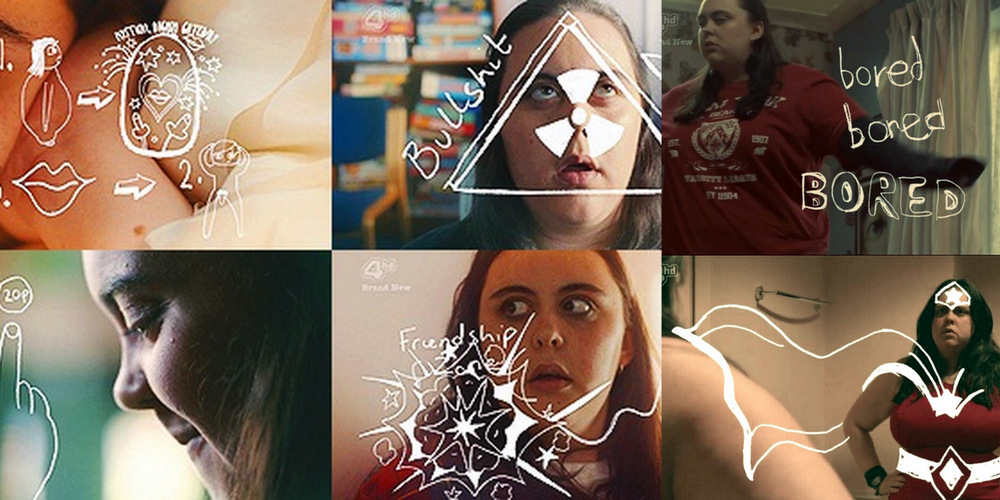
What struck me most, as I delved into my own intimate past, was how boring and everyday so many entries in my diary had been. Although on TV we love to jump into love stories and frenemy feuds, as the ultimate teenage preoccupations, the reality is that those stories can often be extremely slow-paced. Fictional teens may obsess over a love interest one week and find their feelings miraculously reciprocated the next. If my personal experience is at all representative, these fictional teens have an alarmingly high crush-to-relationship success rate.
The teenage diary is actually a really good idea for framing a series squarely from the adolescent protagonist’s perspective. But realistically speaking, many diary depictions are straight-up stories, not emotions, to do lists, encoded language (just in case your mom finds it) and repetitive, messy pictures of a teenage mind. In my mind, it would be nice if these depictions would put in a bit more effort to maintain the illusion that these characters are expressing their inner thoughts, and angst, not writing a carefully worded memoir.


That was actually really informative. Sounds like a fun fundraiser too 🙂 You know your stuff, miss.