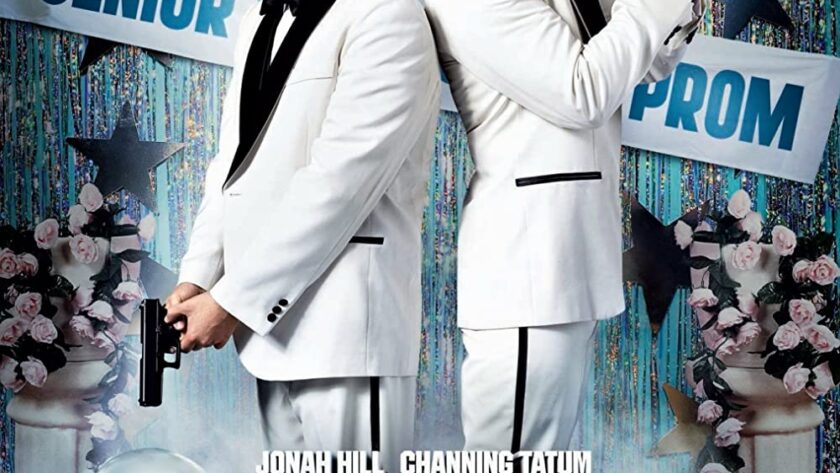
It is impossible to try to describe what 21 Jump Street is about without making it sound much worse than it is. This is a movie remake of the 80s TV show which starred Johnny Depp, where young cops (yet to make their first arrest) are sent undercover at high school to uncover a local drug supplier. It’s a buddy cop film that teams the nerdy, uncool guy with the dumb, buff, popular guy. So here’s the first twist, although the two were practically enemies in high school, their partnership, seven years after graduation, is a result of their own desire to team up and become friends.
Although full of silly jokes and dick jokes and the ridiculous stakes and coincidences of a comedy cop film, 21 Jump Street becomes something far richer than the sum of its parts. Alongside the undercover cop narrative lies an intriguing examination of the return to high school. Unlike so many high school movies and TV shows, which emphasize the universal experience of growing up, this movie demonstrates how much changes after time away.
In an endearing turn of events, the seven years between Schmidt and Jenko’s graduation and their second go-around has brought about a shift in the social mores and divisions of high school popularity. Unlike silly jokes about new fads often found in passing reference on sitcoms (see The Mindy Project‘s “slime”), these changes reflect the significant strides that American culture has taken in the past ten years. Environmentalism is in, taking pride in your talents is no longer dumb, being gay is not an acceptable insult. Popularity, we are soon to learn, can no longer rely simply on cool cars, athleticism, and put-downs (or “burns” as they were called back in the day… do kids still say that?)
While it may be an optimistic vision of the world, this portrayal of high school life demonstrates how youth are ultimately at the forefront of social change, adopting whole-heartedly the progressive values that are slowly seeping into the mainstream culture. And while the culture in high school is demonstrably changed, so too are the adults who lived through the high school experience we, the young adult audience, are more likely to remember and identify with.
Although the Jump Street team’s commanding officer offers a speech inviting his young cops to embrace their stereotypes, the film as a whole does just the opposite. It deconstructs our assumptions about what is universal in the high school experience, separating out empty archetypes from temporal experiences (the school play, a house party, prom), events that continue to take place, no matter who, or what, is cool.

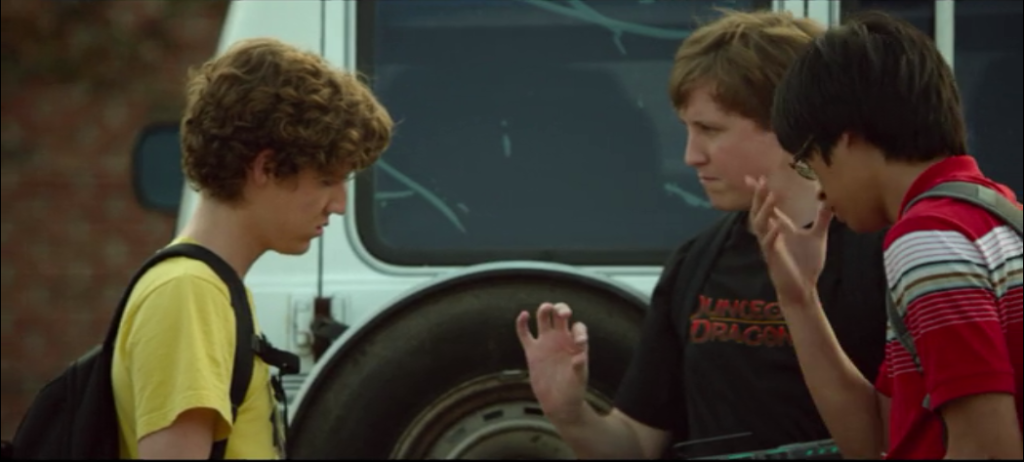

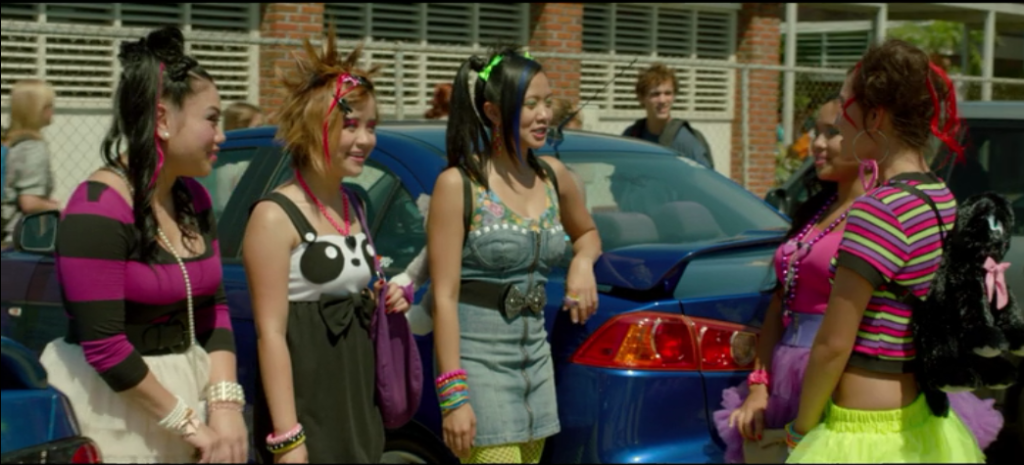
This film embraces the unexpected sincerity found when the character stereotypes are pulled back to reveal the humanity, and the comedy, that lie beneath.
As Schmidt and Jenko enter the school for the first time, the traditional high school movie introduction to the school’s clique system takes a turn. It’s one of those lighter moments in this film that only takes a second but makes all the difference, when a small line reveals so much about the state of the world.
Here is the moment when the world of expectations begins to spin, where we start to doubt that Jenko’s advice on how to fit in with the cool, popular kids is totally relevant, where the expectations of buffoonery shift from Schmidt’s innate nerdiness to Jenko’s potential datedness. As we enter the new high school world of 2012, the built up expectations of tropes, categories, and stereotypes are shuffled up and tossed aside.
“I am so confused right now.”
Audiences are prompted by the incessant repetition of cliques and categories in popular media to expect things like stereotypical social divisions of high school to be etched in stone, but in 21 Jump Street they are revealed to be as impermanent as the high school population, ever shifting with the years. Not only does this make the film richer, it demonstrates how high school fiction can tell stories about interesting people without totally relying on clichés.
It’s a clever way to bring out the unexpected, to shift the roles normally prescribed by physicality and social script, and ultimately it allows the movie to explore more deeply the relationship between it’s protagonists, as their characters are fleshed out. It’s unexpected because it’s a buddy cop film filled with dick jokes, and a high school film where a major drug deal is scheduled to go down at prom. But defying the limitations of genre, 21 Jump Street is funny, and sweet, and thoughtful in its deconstruction of expectations.