

Of all teen television shows that have graced the small screen, Friday Night Lights is special. There are so many little things that set it apart from the rest of the genre. Of these little differences, one huge one is the series’ depiction of religion.
Teens who actively participate in religion/church on television are rare. The majority of teen drama main characters are non-practicing, their parents don’t go to church, and it’s mostly not discussed. Often there’s a Jewish character, but again, aside from quips about not celebrating Christmas, religion is almost never a significant aspect of main characters’ lives.
When religious characters do show up, they tend to act as vehicles for disapproval of “teen” behaviour, or occasionally provide a source of prejudice, hatred, and bigotry.
On Dawson’s Creek, Jack is refused tickets to the prom because the girl
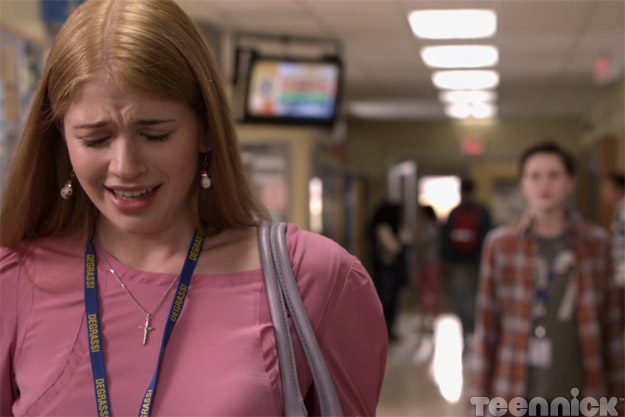
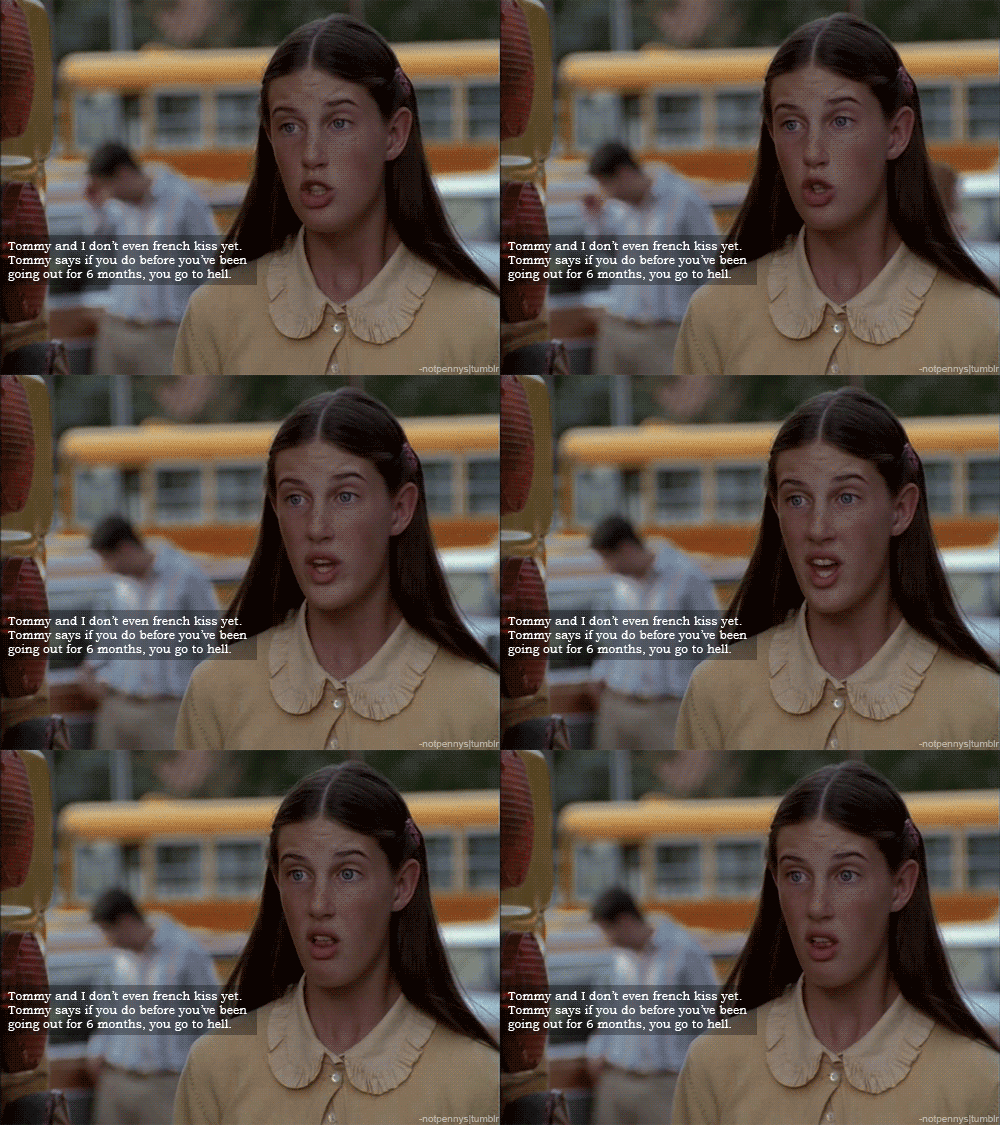
selling them disapproves of his male date, claiming they’re going to hell. On Freaks and Geeks, it is religious Millie who warns Lindsay not to have sex because boys won’t want to marry her if she does. More recently, on Degrassi, it is Becky, the pastor’s daughter, who objects to the school play “advocating homosexuality” when Romeo and Juliet is rewritten as Romeo and Jules, starring two teen boys.
Religious values are traditionally old (often outdated) and are easily coupled with conservative intolerance. By combining the two, teen shows who want their sympathetic characters to face prejudice have a go-to excuse for why fellow teens might treat someone so terribly: Christians (as we all know) disapprove of gay people, of sex, and of partying and drugs.
It’s a pattern that on the surface makes sense. Christians have been the most vocal and identifiable group of anti-gay rights activism as well as anti-contraception and anti-abortion activism. Considering these real world examples use God and religion as rationale for hatred and repression, it makes some logical sense to give teen characters the same reasons for bullying.
But unfortunately this pattern of representation reinforces a narrow stereotype of religious youth. Not only that, but it simultaneously lets non-believers off the hook, as if not believing in God creates some kind of enlightened acceptance of others’ differences.
By alluding to religion as the cause of prejudice, teen shows tend to white wash over the far less straightforward intolerance that teens sometimes face. Bullies don’t necessarily have good reasons for their actions.
On the flip side, not all religious youth are uptight Christians, and not all Christians are short-sighted bigots.
Which brings me back to how FNL is different. Unlike most series, which try to act as Anywhere High, USA, Friday Night Lights tells a specific, localized story about a high school in Dillon, TX. It is a story about a community where everyone goes to church on Sunday morning and everyone goes to the football game on Friday night. It is such a unique teen series because it embraces the particularities that set Dillon apart. It tries to reflect the complexities of individuals and (in general) rejects stock character tropes like the angry, intolerant Christian and instead gives us a town full of Christians who are all complex individuals who express their Christianity in a variety of ways.
By sticking religion into a stock character trope box, the realities of both religious observance and social intolerance are erased, and teen television falls into the trap of perpetuating lazy stereotypes. Viewers learn to expect bigotry from religion, and ignore it from everyone else. The argument that stereotypes are based on reality does not excuse their detrimental effects on society and culture. Forgetting that people are complex individuals who can’t be reduced to the colour of their skin, their athletic or scholastic prowess, or the God they believe in is a problem that screen-writers and producers need to constantly address. Like it or not, we learn about the world by watching it on television, and stereotypes – even stereotypes about prejudice – perpetuate prejudice and misunderstanding.



Degrassi also has Clare, who is religious (and has had her judgmental moments – mostly when she was younger) but accepts Adam immediately and has never harbored any prejudices against any gay characters.
I agree that FNL did a great job of including religion as just an important part of characters’ lives, though they did have that weird Lyla arc in Season 2 but then again, it was Season 2.